 Instagram
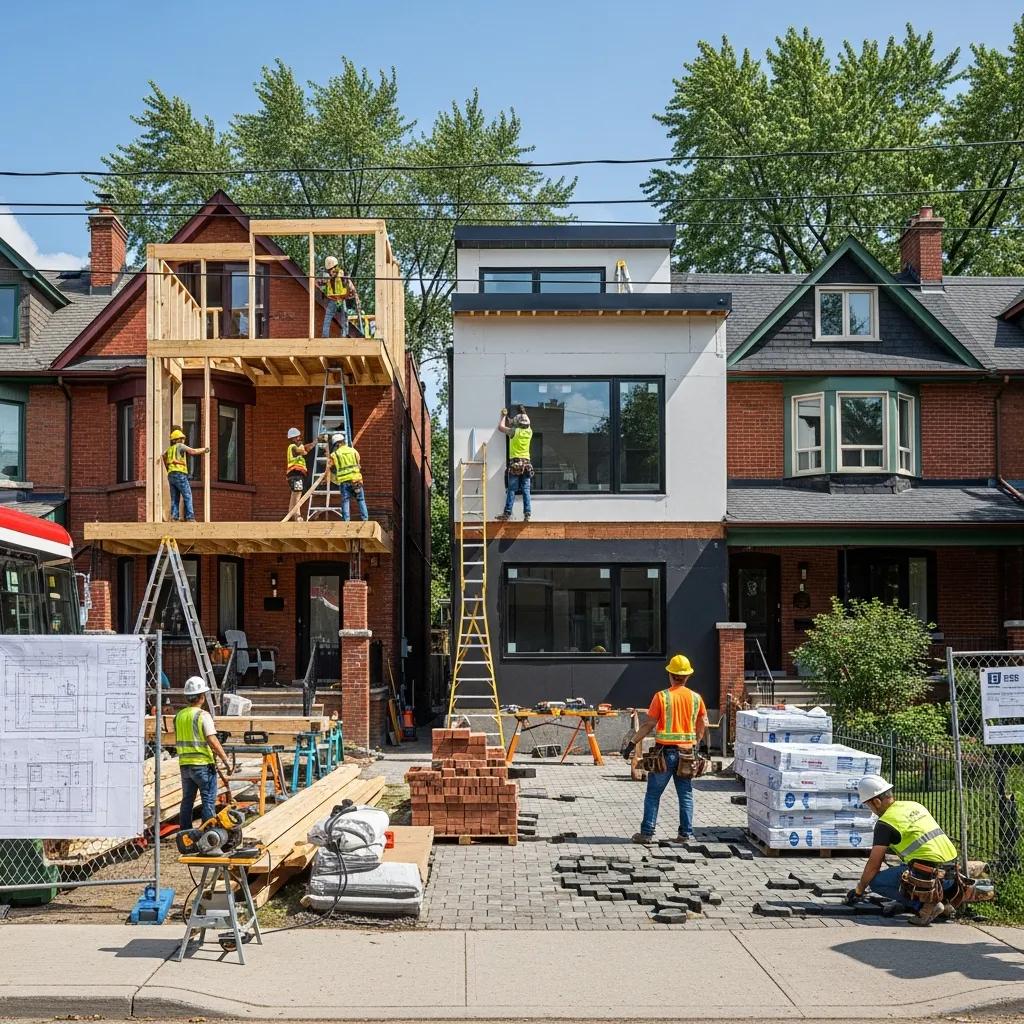
Toronto Building Codes for Home Renovations — Permits, Rules, and How to Stay Compliant
Toronto’s building code and permit system determine when and how you can change a home’s structure, services, or occupancy — and those rules shape project scope, schedule, and cost. This guide translates the Ontario Building Code (OBC) and City of Toronto permit process into practical steps homeowners can use. From legalizing a basement suite to adding a second storey or doing a kitchen remodel, many projects trigger permits, inspections, or zoning reviews. Knowing those triggers reduces surprises, protects resale value, and helps keep insurance in good standing. You’ll find what typically needs a permit, how the City’s application and ePlan review work, what the 2025 OBC changes mean for energy, accessibility and resilience, and when zoning or the Committee of Adjustment can affect feasibility. We also cover cost categories, contingency planning, and delivery options — including why an integrated design‑build approach often smooths compliance. Read on for clear checklists, plain‑language mappings of rules to impacts, and next steps for homeowners in the GTA.
What Are the Key Toronto Building Permit Requirements for Home Renovations?
A building permit is the city’s sign‑off that planned work meets the Ontario Building Code and local bylaws. Permits focus on safety: structure, fire protection, plumbing, electrical systems and changes to how a space is used. Permits exist because renovations can affect loads, fire separation, exits and other life‑safety systems — so the City of Toronto’s Building Division reviews plans and documentation before work starts. Skipping required permits risks stop‑work orders, fines, insurance headaches and expensive fixes at sale. Pulling the right permits protects you and future buyers. Knowing common permit types and their triggers helps you scope projects, gather the right drawings and reports, and avoid review delays. The sections below list typical permit triggers and walk through the application steps so your next move is clear.
Which Renovation Projects Require a Building Permit in Toronto?

Generally, any work that changes a building’s structure, exits, plumbing, or occupancy needs a permit. That covers most conversions, additions and major system upgrades. Common permit‑triggering projects include structural changes (removing load‑bearing walls, creating new openings), full basement finishes or conversions to legal basement apartments, second‑storey additions, new or altered plumbing and HVAC, major electrical service upgrades, and demolition that affects structure. Small cosmetic jobs — painting, replacing cabinets — usually don’t need a permit. But adding a new kitchen, bathrooms, installing egress windows, or changing a building’s use typically will. When a project sits near a permit threshold, get advice from a qualified designer or engineer and check City of Toronto guidance or ePlan rules to confirm.
How Does the Toronto Building Permit Application Process Work?
Permit applications follow a predictable flow: prepare, submit, review, respond, receive the permit, and schedule inspections as work proceeds. Preparation means producing site plans, floor plans, elevations, engineer reports for structural work, and any specifications reviewers will need. Where available, submit electronically through the City’s ePlan system to speed review. Reviews often generate comments requesting revisions or extra documents — responding quickly and with coordinated drawings shortens review cycles. After the permit issues, mandatory inspections (foundation, framing, insulation, final, etc.) happen at set stages; passing inspections confirms compliance and clears final occupancy or legal unit certification. Timelines vary by scope, but clear, complete submissions and avoiding common errors help get approvals faster.
How Does the Ontario Building Code Apply to Renovations in Toronto?
The Ontario Building Code (OBC) sets provincial minimums for structure, fire protection, egress, energy performance and accessibility; municipalities like Toronto enforce those rules through permit reviews and inspections. For home renovations, important OBC requirements map to practical checklist items: framing and foundations must meet load calculations, fire separations and rated assemblies are often required for new units, stairs and exits must meet dimensional standards, and envelope work may trigger energy upgrades. The OBC also interacts with accessibility rules and municipal zoning; understanding how each section applies to a project clarifies scope and helps avoid costly rework. Below is a plain‑language mapping of core OBC areas to their renovation impacts to make those links easier to follow.
| OBC Section | Key Requirement | Practical Impact on Renovation |
|---|---|---|
| Structural (loads & members) | Framing, beams and foundations must meet calculated loads | May require engineered drawings and stronger footings for additions or second storeys |
| Fire Protection & Separation | Rated assemblies, fire‑stopping and unit separations | Legal basement suites and multi‑level additions often need rated walls and upgraded doors |
| Egress & Stairs | Minimum widths, headroom and handrails for safe escape | Basement conversions need proper egress windows or stairs; second storeys need compliant stairs |
| Energy Efficiency | Insulation, air barrier and window performance minimums | Existing walls, roofs or windows may require retrofit insulation and improved sealing |
| Accessibility | Clearances, routes and barrier‑free measures for certain projects | Larger renovations may need accessible features or design choices aligned with AODA guidance |
What Are the Essential Ontario Building Code Sections for Residential Renovations?
The OBC sections that most affect homes focus on structure, fire safety, egress, energy and ventilation — and each influences design, materials and consultant needs. Structural rules determine whether engineered upgrades are required for new loads or openings. Fire separation and rated assemblies set requirements for walls, doors and smoke control in multi‑unit or secondary units. Egress standards ensure exits, stairs and windows meet safety dimensions, which directly affects basements and second‑storey work. The 2025 energy updates raise thermal requirements and introduce airtightness and performance testing that can change retrofit scope and material choices. Knowing these sections helps homeowners budget for consultant fees and targeted upgrades before submitting permits.
What Are the 2025 Ontario Building Code Updates Affecting Toronto Renovations?
The 2025 OBC changes push for higher energy performance, stronger accessibility guidance, and climate resilience measures aimed at lowering operating costs and improving occupant safety during extreme weather. Energy updates raise minimum R‑values, tighten air‑sealing expectations and introduce performance testing that may require better insulation, higher‑performance windows and upgraded mechanical ventilation. Accessibility updates encourage reduced barriers and clearer guidance for accessible routes and fittings on larger projects, aligning closer to AODA principles. Resilience measures call for more attention to basement waterproofing and, where risks warrant, backwater valves or sump pumps and other drainage protections to reduce flood damage. These changes affect design and budgets early in the process and should be considered during feasibility so permit applications reflect current code.
How Do Toronto Zoning Bylaws Impact Home Additions and Renovations?

Zoning bylaws dictate how much you can build on a lot — height, setbacks, lot coverage and floor space index (FSI) — and those limits often determine whether an addition or second storey is feasible without relief. Zoning rules vary by municipality and neighbourhood, so a design that fits one lot might need a variance on the next. Check local zoning maps and schedules early to confirm numeric limits and permitted uses; if a project exceeds those limits you’ll typically need a minor variance or consent from the Committee of Adjustment, which adds time and uncertainty. Early zoning checks reveal whether a rear extension, second storey or extra dwelling unit requires a formal CoA application and public notice.
| Zoning Rule | Applies To | Typical Limits / Example |
|---|---|---|
| Height | Second‑storey additions, dormers | Limits vary by zone; can prevent full second‑storey rebuilds without relief |
| Setbacks (front/rear/side) | Additions, decks, porches | Minimum distances from property lines that affect extension width and window placement |
| Lot Coverage | Additions, accessory structures | Cap on percentage of lot covered by buildings; affects size of rear extensions and garages |
| Floor Space Index (FSI) | Total gross floor area relative to lot size | Controls total livable area and can limit second‑storey increases |
What Are the Height, Setback, and Lot Coverage Rules for Home Additions in Toronto?
Height, setback and lot coverage rules shape a project’s massing and placement and determine whether a design fits the neighbourhood envelope — often forcing design compromises. Height caps can block full second‑storey additions on lots with tight maximums. Setback rules set required distances from property lines, affecting usable floor area and window layout. Lot coverage limits the building footprint and can make a rear extension infeasible without changes elsewhere on the property. Rules differ between boroughs like Scarborough, North York and Etobicoke, so consult the local zoning schedule and a planner early to identify when a minor variance is the practical route.
When Is a Minor Variance Required and How Does the Committee of Adjustment Process Work?
You need a minor variance when a proposal can’t meet a numeric zoning standard but asks the Committee of Adjustment (CoA) for relief. The CoA evaluates applications against four tests that focus on minor impact and preserving the bylaw’s intent. The process usually requires submitting plans and a justification, issuing public notice to neighbours, and attending a hearing where the committee approves or refuses relief. The full cycle commonly takes eight to twelve weeks depending on complexity and notice periods. Successful applications typically include clear rationale, professional drawings and proactive neighbour outreach to reduce objections. When a CoA application is likely, experienced planners or design‑build teams can prepare stronger submissions and manage timelines to lower permit risk.
When a minor variance is needed, True Form Renovations supports Committee of Adjustment submissions and zoning strategy as part of its regulatory navigation service — coordinating professional drawings and neighbour communications to streamline decision‑making. This integrated approach anticipates likely objections, provides a clear planning rationale and shortens back‑and‑forth during the CoA review, often reducing total project time.
What Are the Typical Costs and Budget Considerations for Home Renovation Permits in Toronto?
Permit costs mix municipal fees, consultant charges and the construction impacts of required code upgrades. Budgeting these elements early protects your contingency and keeps schedules realistic. Hard costs cover labour, materials and trade work; soft costs include drawings, structural or mechanical engineering, permit fees and inspection‑related expenses. Permit timelines and potential Committee of Adjustment processes can raise soft costs and stretch schedules, which in turn can increase hard costs through longer overhead or temporary accommodations. Plan contingencies for unknowns found during demolition and for upgrades driven by the 2025 OBC energy and resilience requirements.
| Cost Category | Includes | Typical Range / Notes |
|---|---|---|
| Permit & Municipal Fees | Building permit, plumbing and electrical permits | Varies with project value and scope — small renos are modest; additions cost more |
| Consultant Fees | Architect/designer, structural engineer, survey | Often 5–12% of design/construction budget depending on complexity |
| Construction Hard Costs | Labour, materials, trades, demolition | The largest portion; depends on scope, finish level and location |
| Contingency | Unknown conditions, code‑driven upgrades | Commonly 10–20% for renovations to cover hidden issues |
How Are Permit Fees and Renovation Costs Broken Down in Toronto?
Permit fees are part of soft costs and are calculated from project valuation and scope — larger additions incur higher municipal fees and more inspections. Consultant fees for drawings and engineering are essential for structural, zoning or complex mechanical work and should be scheduled before permit submission to avoid delays. Construction hard costs depend on finish quality, structural challenges and the need to meet new OBC energy or resilience measures. Homeowners should set aside a contingency (commonly 10–20%) for discoveries during demolition, required remediation, or code‑triggered upgrades such as added insulation or sump/backwater protections.
This cost breakdown shows the elements that influence the price of a home addition in Toronto and the levers homeowners can use to control budgets during early feasibility.
How Does True Form Renovations’ Fixed Budget Approach Help Manage Permit and Renovation Costs?
True Form Renovations offers a Fixed Budget approach that clarifies scope, allowances and contingency handling up front to reduce financial uncertainty tied to permits and code‑driven changes. Under this model, permit‑driven requirements are priced into the contract during design and permitting rather than treated as open‑ended extras during construction. That reduces budget creep when inspections or municipal comments force modifications, because the integrated team coordinates compliance work and includes predictable items in the fixed price. Homeowners looking for clearer financial anchors can request a Fixed Budget estimate from True Form Renovations to compare predictability against traditional open‑ended bidding and better assess the cost of a permitted addition or legal secondary unit.
Why Choose an Integrated Design-Build Approach for Navigating Toronto Building Codes?
Design‑build combines design, engineering and construction under one accountable team, which streamlines communication, shortens review cycles and reduces permit‑related rework compared with the traditional architect → general contractor split. The integrated model allows earlier technical validation (structural, mechanical, energy), so permit submissions are more complete and less likely to attract extensive reviewer comments. That typically leads to faster permit issuance and fewer change orders during construction. Single‑point responsibility also simplifies coordination with the City of Toronto Building Division and allied consultants, improving predictability for timelines and budgets. The list below summarizes design‑build advantages and helps homeowners decide when an integrated approach makes sense.
- Single‑point accountability: One contract reduces finger‑pointing and makes someone clearly responsible for permit coordination.
- Faster design‑to‑build cycles: Integrated teams overlap design and procurement to compress schedules and reduce idle time.
- Fewer change orders: Early technical vetting cuts surprises and scope gaps that surface during municipal review.
- Smoother inspections: Aligned documentation and sequencing keep inspections on schedule with construction milestones.
What Are the Benefits of Design-Build Versus Architect‑General Contractor Models in Toronto?
Design‑build often delivers faster timelines, better cost certainty and consolidated responsibility, while the traditional architect → general contractor model can suit projects that prioritise independent design vision or unique architectural expression. Design‑build builds constructability and code compliance into early decisions, reducing the chance of costly redesign after municipal review. Conversely, projects that require an independent architect’s voice might accept longer timelines and additional coordination. When choosing delivery, weigh project complexity, permit risk and how much you value single‑point accountability versus independent design oversight.
How Does True Form Renovations’ One Team Model Simplify Permit and Code Compliance?
True Form Renovations uses a One Team approach that coordinates in‑house project management with partnered designers and engineers to handle documentation, permit submissions and inspections as a single workflow. Structural checks, energy performance and zoning strategy are addressed collaboratively during design to reduce resubmissions and shorten permit review loops. The One Team method focuses on regulatory navigation and fixed‑budget clarity, delivering a coordinated path from feasibility to occupancy and removing much of the administrative burden from owners. Homeowners benefit from consolidated communication, fewer surprises in review comments, and a smoother inspection schedule backed by our borough‑level experience across the GTA.
What Specific Building Code Considerations Apply to Common Toronto Renovation Types?
Different renovation types trigger different code requirements. Basements and second‑storey additions focus on egress, fire separation and structural loads. Kitchens and bathrooms often trigger plumbing, ventilation and electrical permits. Condo renovations add strata approvals and common‑element rules. Each project type needs a targeted checklist so the City of Toronto Building Division receives documentation addressing the relevant OBC sections. Knowing these code drivers helps homeowners scope design, pick the right consultants and budget for mandatory upgrades like ventilation systems or rated assemblies. The sections below provide focused checklists for legal basement apartments, second‑storey additions and interior renovations including condos.
What Are the Code Requirements for Legal Basement Apartments and Second Story Additions?
Legal basement apartments require safe egress (egress windows or direct access), minimum ceiling heights, proper fire separation and rated assemblies between units, and sound attenuation measures; plumbing and heating must meet OBC standards and 2025 resilience updates may add sump/backwater protection requirements. Second‑storey additions need structural analysis to ensure foundations and framing can carry new loads, and stairs must meet egress and headroom rules. Both project types commonly require engineered drawings, energy upgrades for new envelope areas, and coordinated inspections at foundation, framing and final stages. Early investigation of existing conditions and pre‑submission engineering reduces the risk of mid‑construction scope changes and cost escalation.
How Do Building Codes Affect Kitchen, Bathroom, and Condo Renovations in Toronto?
Kitchens and bathrooms frequently trigger plumbing, electrical and ventilation permits. Code requirements include mechanical ventilation rates, protected wiring and circuits, GFCI protection and appropriate water‑bearing floor assemblies where needed. Condo renovations add condominium corporation approvals and common‑element coordination, which often require work‑hour limits, insurance certificates and professional approvals before permits are issued. Accessibility and energy upgrades can also affect layouts and fixture choices, especially for larger renovations or when replacing major systems. Planning these technical and governance steps in advance — including scheduling condo board approvals — prevents permit‑stage surprises and keeps municipal inspections aligned with condo requirements.
If you’re ready to check feasibility or want a clear, permit‑aware estimate, request a free estimate or contact True Form Renovations for a feasibility review. Our Integrated Design & Build approach and Fixed Budget offering aim to give financial clarity and regulatory guidance for Toronto and GTA projects. Request a free estimate or immediate assistance through our contact channels or Google Business Profile to start a permit‑informed plan.
