 Instagram
Understanding Design‑Build Costs in Toronto: Key Factors That Shape Your Renovation Budget
Design‑build projects bring design and construction together under one roof, which helps Toronto homeowners set clearer budgets and cut coordination risk. Below we explain the main cost drivers for design‑build renovations in Toronto and the GTA, how municipal timelines and local bylaws influence pricing, and why transparency matters when you’re planning a realistic budget. Many homeowners search for terms like “Cost of home addition Toronto” or “Hard costs vs soft costs Toronto” before they call a contractor — this guide offers practical ranges, permit timelines, and comparisons of delivery methods to close that information gap. We cover the core cost components, walk through Toronto permit steps and typical fees, and map neighbourhood impacts so you can build a practical budget. Each section uses Toronto examples, quick‑reference tables, and checklists to turn high‑level concepts into actionable next steps. Read on to get financial clarity, understand regulatory navigation, and weigh the real advantages of an integrated design‑build approach.
What Are the Main Cost Components in Toronto Design‑Build Projects?
In Toronto design‑build projects the main costs fall into three buckets: hard costs, soft costs, and contingency allowances — each affects the final budget and schedule in different ways. Hard costs cover labour, materials, structural work and on‑site trades; these fluctuate with market prices and site complexity. Soft costs include design fees, permit fees, engineering, inspections and finance charges that affect upfront and administrative lines. Contingency and allowances capture unknowns — hidden site conditions, asbestos remediation, or zoning‑driven redesigns — and are critical for realistic planning. Below is a short summary of the categories every homeowner should track when estimating a Toronto renovation.
Key cost categories to consider:
- Hard Costs: Materials, labour, site work and contractor‑installed systems.
- Soft Costs: Design fees, permit fees, engineering, inspections and project management.
- Contingency & Allowances: Site‑specific unknowns, owner‑requested upgrades and market volatility.
These elements interact: material price swings raise hard costs and push up contingency needs. Below we break down common line items and typical Toronto ranges to help you budget.
Different line items and their typical Toronto ranges are shown for quick budgeting and comparison.
| Cost Component | Includes | Typical CAD Range / Notes |
|---|---|---|
| Structural & Framing | Foundation work, load‑bearing changes, second‑storey support | $15,000 – $80,000 depending on scope |
| Interior Finishes | Flooring, cabinetry, countertops, fixtures | $8,000 – $60,000 per major room |
| Trades & Labour | Carpentry, electrical, plumbing, HVAC | 30–45% of total hard cost budget |
| Design & Engineering | Architectural drawings, structural engineering | $5,000 – $25,000 depending on complexity |
| Permits & Municipal Fees | Building permits, inspections, minor variances | $1,500 – $25,000 depending on application |
| Contingency | Unforeseen conditions, allowances | 5–15% of overall project budget |
This table makes it easier to see how each piece contributes to the total budget and sets up the permit timeline and soft‑cost discussion that follows.
How Do Hard Costs and Soft Costs Differ in Toronto Renovations?

Hard costs are the tangible construction expenses — materials, on‑site labour, subcontractor fees and building systems — and generally make up the largest portion of a renovation. They vary with labour availability in neighbourhoods, delivery logistics, and structural complexity (for example, replacing joists or underpinning foundations). Soft costs are the professional and administrative expenses that happen before and during construction: architectural design, engineering, permit applications, development charges where applicable, inspections and project management fees. Soft costs also include Committee of Adjustment application fees when variances are needed; they’re less visible but can materially affect schedule and cash flow. Knowing the difference helps you allocate funds where they’re needed and see which items can be negotiated and which are fixed.
With that distinction clear, the next section gives practical budget ranges for common project types in Toronto so you can see how hard and soft costs combine on real jobs.
What Typical Cost Ranges Should You Expect for Home Additions and Renovations in Toronto?
Costs in Toronto vary by project type, finish level and site constraints — but benchmarks help set realistic expectations. Kitchen renovations in the GTA usually range from mid‑level to high‑end budgets, driven by cabinetry, appliances and layout changes. Basements can offer lower per‑square‑foot hard costs but can spike if structural remediation, waterproofing or mechanical upgrades are needed. Home additions — single or second‑storey — often have the highest per‑square‑foot price because of foundation, structural and permit complexity. Urban factors such as downtown access, staging limits and heritage overlays push costs higher. Setting mid‑ and high‑range targets early reduces the risk of surprises during construction.
When you build a preliminary budget, use allowances for fixtures and finishes and set a contingency percentage aligned to scope to manage unknowns and protect the fixed budget you aim to achieve.
How Does Toronto’s Building Permit Process Impact Design‑Build Project Costs and Timelines?
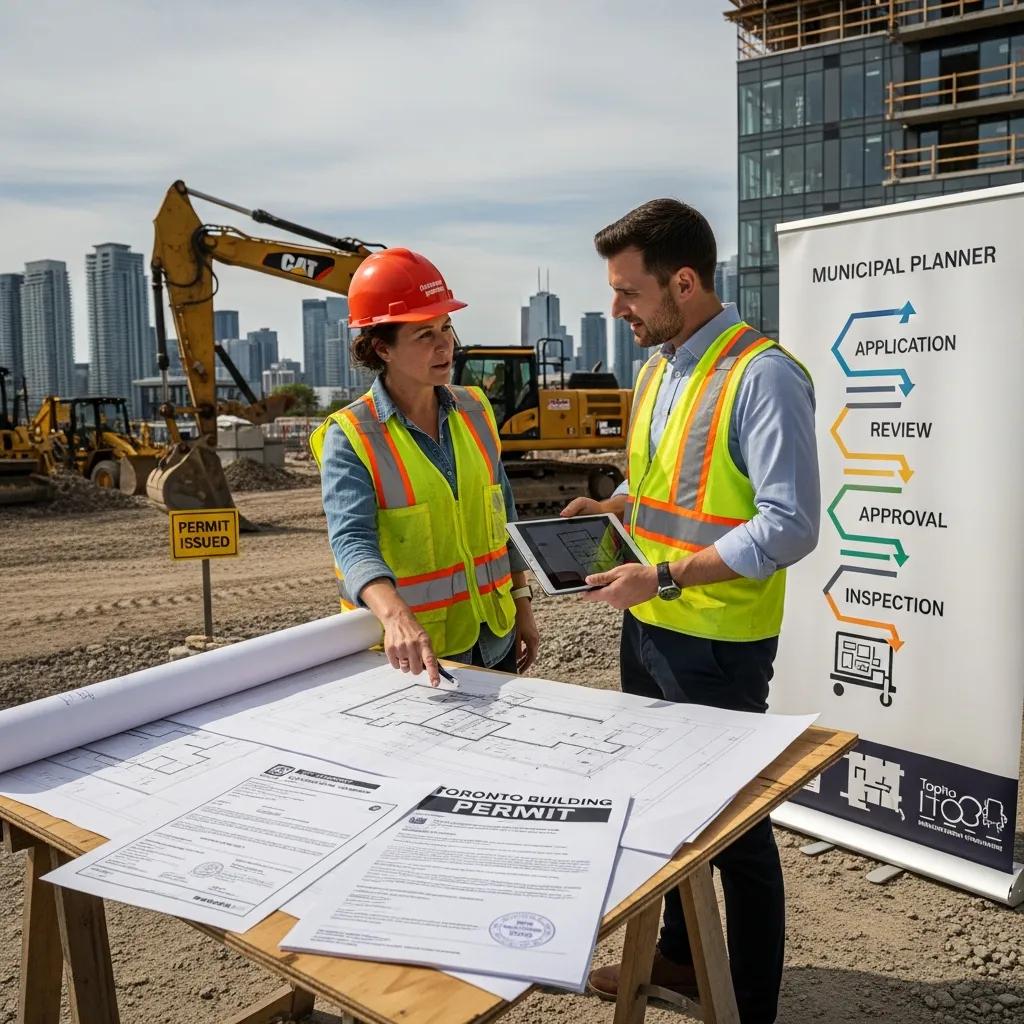
Toronto’s permit process affects timelines and soft‑cost exposure through application review, required documentation and possible variance hearings — steps that can add weeks or months to a schedule and increase carrying costs. Permits need complete drawings, structural engineering when applicable, and clear coordination with municipal reviewers; incomplete submissions create revision cycles that extend timelines. Permit delays can generate extra soft costs such as extended project management fees, temporary accommodation or storage if construction pauses. Planning submissions with accurate documentation and anticipating Committee of Adjustment needs reduces the risk of costly schedule slips and ensures OBC compliance aligns with construction sequencing. Below is a practical breakdown of common permit types, processing times and fee ranges so you can quantify the impacts.
Typical permit types, processing times, and fee ranges are summarized to make soft‑cost impacts tangible.
| Permit Type | Average Processing Time | Typical Fee Range / Potential Delay Risks |
|---|---|---|
| Building Permit | 4–12 weeks (complex projects longer) | $1,500 – $15,000; delays for incomplete drawings |
| Minor Variance / Committee of Adjustment | 8–16 weeks including notices | $3,000 – $20,000 (consultant + application fees) |
| Heritage Review | 6–20 weeks depending on file | $2,000 – $25,000; potential scope revisions required |
| Plumbing/Electrical Permits | 1–6 weeks concurrent with building permit | $200 – $5,000; contractor coordination reduces delays |
This table shows how different permit tracks create soft‑cost risk and why proactive, complete submissions reduce timeline exposure and extra expense.
Steps to navigate permits and practical tips to reduce delays:
- Prepare complete drawings and engineering: A full submission reduces review cycles and speeds issuance.
- Pre‑consult with municipal planners: Early clarification of zoning and heritage constraints avoids costly redesigns later.
- Schedule inspections strategically: Grouping inspections where possible keeps work moving and reduces idle time.
Using these steps shortens schedule exposure and highlights how an integrated team can manage the process — described next.
What Are the Steps and Fees Involved in Toronto Building Permits for Renovations?
Applying for a Toronto building permit starts with a complete set of architectural drawings, structural engineering when needed, and any planning approvals for variances or site changes. Incomplete submissions are the most common cause of review delays. After submission, municipal reviewers check conformity with the Ontario Building Code and local bylaws; they may request revisions, which restarts parts of the timeline and raises soft costs. Typical fees include the base building permit, plan review charges and any development charges or Committee of Adjustment costs when variances are required — together these can be a significant portion of early soft costs. Anticipating review cycles, engaging consultants early and budgeting a permit contingency helps homeowners avoid last‑minute shocks. A clear permit roadmap also informs contingency sizing and realistic schedule planning for construction.
That roadmap supports better contingency planning and reduces uncertainty as your project moves to construction.
How Does True Form’s Integrated Model Simplify Ontario Building Code Compliance?
Our integrated design‑build model brings design, permitting and construction into one coordinated team to reduce rework, speed approvals and provide a single point of accountability with Toronto authorities. By coordinating architectural drawings, structural engineering and permit submissions internally, the team spots potential OBC or zoning conflicts early and resolves them before municipal review, lowering the chance of multiple revision cycles. That shortens processing timelines, reduces soft‑cost carry and lessens the homeowner’s administrative burden while improving cost predictability. If you want a permit feasibility assessment or a clearer roadmap through Toronto’s permitting landscape, True Form Renovations coordinates design decisions with municipal requirements and buildability in mind. Contacting a design‑build team early helps quantify likely permit fees and realistic timelines during a free feasibility conversation.
This internal coordination leads directly into why pricing transparency and a fixed budget matter for Toronto renovations.
Why Is Design‑Build Pricing Transparency Crucial for Toronto Home Renovation Budgets?
Transparent design‑build pricing spells out what’s included — hard costs, soft costs, allowances and contingency — so homeowners can compare proposals and reduce surprise change orders. Clear pricing breaks the project into line items and allowances, calls out exclusions and sets straightforward change‑order rules, which helps with decisions and cash‑flow planning. A fixed budget inside a transparent contract gives homeowners a defined spending ceiling while allowing controlled allowances for selections that affect price. Transparency also builds trust between clients and an integrated team by aligning expectations on quality, schedule and procurement. The next sections explain how a fixed budget works in practice and why a one‑team approach improves cost control.
Clear pricing transparency ties directly into fixed‑budget contracts and the project management benefits that follow.
How Does a Fixed Budget Approach Eliminate Renovation Surprises in Toronto?
A fixed budget approach sets a baseline contract value that includes a defined scope, allowances for finishes and a contingency for unknowns, limiting unexpected homeowner costs while keeping scope clear. Listing allowances (for example cabinetry or flooring) with selection windows and change‑order rules makes it clear which choices change the price and by how much. Contingency percentages handle unforeseen site conditions such as hidden structural issues or hazardous‑material remediation; when triggered, the budget framework outlines how those items are resolved. Fixed budgets also rely on disciplined change‑order workflows to document scope changes and approvals, protecting both homeowner and builder from disputes. In Toronto, implementing this approach means folding local permit and zoning risk into the contract so municipal exposure is accounted for up front.
This approach complements a One Team project management style, which further reduces friction and cost escalation.
What Are the Benefits of One Team Project Management for Cost Control in Toronto?
One Team project management places design, procurement and construction decision‑making within a single coordinated group to speed decisions, tighten schedules and reduce the friction that causes cost overruns in fragmented models. Centralized procurement lets the team negotiate bulk pricing, align lead times to avoid storage or rush charges, and sequence trades to minimize idle labour costs. Integrated communication removes the common “blame game” between designers and contractors, enabling faster site resolutions and fewer costly redesigns. For homeowners, that means fewer change orders, clearer timelines and a more predictable final cost. In Toronto, where inspection schedules and staging constraints are tight, this coordination helps avoid penalty costs and extended site occupancy.
These cost‑control benefits make design‑build compelling compared with traditional delivery methods, which we compare next.
How Do Local Factors Influence Design‑Build Project Costs Across Toronto and the GTA?
Local factors — lot access, housing stock age, heritage overlays and borough zoning — create meaningful cost variance across Toronto and the GTA and should be evaluated during feasibility. Older neighbourhood properties often need unexpected structural or mechanical upgrades; narrow lot access can increase hoarding or crane costs; and heritage overlays usually add design and permit work — all increasing hard and soft costs. Labour availability and subcontractor mobilization vary by borough, affecting scheduling and unit rates. Staging restrictions, parking limits and noise bylaws also influence logistics and temporary service costs. Identifying these neighbourhood drivers early helps you budget more accurately and choose procurement or phasing strategies to mitigate local constraints.
Concrete borough examples and mitigation strategies follow to show how these factors translate to cost.
What Are the Unique Construction Challenges in Toronto Boroughs Like Scarborough and Etobicoke?
Scarborough homes are often older post‑war builds on deeper lots, where foundation conditions or long plumbing runs can add remediation costs. Etobicoke sites may face tighter lot‑coverage scrutiny and variable soil conditions that affect footings and drainage. In Scarborough, longer utility runs and possible road or lane access permits can increase mobilization and trenching costs; in Etobicoke, proximity to floodplains in some areas can require extra geotechnical work. Mitigation strategies include phased construction, targeted pre‑construction site investigations and staged procurement to reduce surprises and control cash flow. Identifying these issues early lets teams price accurately and propose value‑engineering solutions that protect design goals while limiting unexpected cost escalation.
With local variations understood, the next section explains how zoning can affect costs when additions or variances are involved.
How Do Zoning Bylaws Affect Home Addition Costs in Toronto Neighbourhoods?
Zoning bylaws set setbacks, height limits, floor space index and lot coverage rules that determine whether an addition is permitted or needs a Committee of Adjustment application — and pursuing a variance adds soft costs and time. When variances are required, budget for planning consultants, application fees, public notices and possible redesigns to meet municipal expectations; all of this increases soft costs and timelines. Design strategies — stepping back upper‑storey massing, reconfiguring rooflines or shifting window placements — can sometimes avoid variances and save time and money. Early zoning analysis in design reduces rework and aligns structural scope with what the municipality is likely to approve, limiting budgetary impact from municipal negotiation.
These zoning impacts are a key reason delivery method matters for cost predictability; the next section compares options.
How Does Design‑Build Compare to Traditional Methods in Cost and Efficiency for Toronto Projects?
Design‑build centralizes responsibility, aligning design choices with construction realities to reduce the risks found in architect‑led or general‑contractor procurement models; that alignment often improves cost predictability and schedule certainty. Architect‑led design‑bid‑build separates design from construction and can create adversarial gaps when unforeseen conditions arise, increasing change orders. General contractor models may control procurement but can lack early design coordination, which leads to constructability issues. Design‑build overlaps design and construction phases to reduce procurement friction, enable faster ordering and coordinate inspections so projects run shorter and carrying costs fall. The table below highlights primary cost drivers and common overrun causes for each method to help homeowners choose the delivery approach that fits their risk tolerance and project complexity.
A structured comparison makes clear where design‑build gains efficiency and where traditional approaches may still fit.
| Project Delivery Method | Primary Cost Drivers | Risk Areas / Typical Overrun Causes |
|---|---|---|
| Design‑Build | Integrated scope, procurement timing, single accountability | Scope creep if allowances are unclear; requires early cost transparency |
| Architect‑Led (Design‑Bid‑Build) | Separate contracts, bid competition | Change orders from constructability issues; longer timelines |
| General Contractor Direct Hire | Procurement quality, subcontractor selection | Poor design coordination leading to rework and claims |
This comparison shows how risk allocation and procurement timing affect cost outcomes and leads to a short checklist of decision points for homeowners.
Key decision factors when choosing a delivery method:
- Project Complexity: Larger structural additions often favour design‑build for integrated problem solving.
- Budget Certainty: If avoiding overruns is a priority, fixed‑budget design‑build or guaranteed maximum price approaches reduce homeowner exposure.
- Owner Involvement: Owners who want close control over design may prefer architect‑led processes but should accept higher coordination risk.
Understanding these trade‑offs shows why integrated design‑build tends to reduce delays and budget overruns in practice, explained further below.
What Are the Cost Differences Between Design‑Build, Architect‑Led, and General Contractor Models?
Design‑build usually bundles soft‑cost fees into a single contract and speeds procurement, which can lower carrying costs and reduce change‑order frequency compared with architect‑led models where separate contracts create gaps. Architect‑led design‑bid‑build may have lower initial design fees but greater soft‑cost exposure from extended bid cycles and potential contractor‑led redesigns, increasing total risk. Hiring a general contractor directly can control subcontractor choice but may still lack early design‑to‑build alignment that prevents constructability problems. Fee structures vary: design professionals charge for full design packages and revisions, while design‑build embeds those fees within construction overheads; lifecycle cost differences hinge on an owner’s tolerance for schedule risk and change orders. Balancing these trade‑offs helps homeowners choose the method that best fits cost, schedule and control objectives.
That analysis leads into how integrated design‑build practices reduce delays in Toronto projects.
How Does Integrated Design‑Build Reduce Delays and Budget Overruns in Toronto Renovations?
Integrated design‑build reduces delays by overlapping design and procurement, coordinating inspections and giving single‑point decision authority for faster responses on site. Procuring long‑lead items during final design lets the team secure key materials early, avoiding late substitutions or rush shipping that inflate hard costs. Centralized change‑order processes and real‑time collaboration limit scope oscillation — a common driver of overruns in fragmented projects. In Toronto, where staging, inspections and permit sequencing are tightly constrained, these efficiencies cut soft‑cost exposure and overall project duration. Typical examples include quicker structural decisions during demolition and fewer inspection rejections thanks to coordinated drawings and trade briefings.
These process efficiencies support the practical cost‑control strategies homeowners need in today’s market.
What Are the Latest Trends and Market Insights Affecting Design‑Build Costs in Toronto for 2025?
Market trends for 2025 show material‑price volatility, upward pressure on certain trade labour rates, and more homeowner interest in sustainability upgrades that affect both upfront and lifecycle costs. Lumber and steel remain sensitive to global supply, while fixture and appliance lead times can impact price and schedule — making early procurement and clear allowances more valuable in fixed budgets. Sustainability features — efficient HVAC, higher‑performance windows and certified appliances — increase initial cost but often deliver long‑term energy savings and higher resale value. The practical takeaway: plan realistic contingencies, prioritise long‑lead procurement and weigh upfront sustainability premiums against expected operational savings. The list below offers pragmatic responses for Toronto renovation projects.
Practical strategies to manage 2025 market conditions:
- Secure long‑lead items early to lock prices and reduce schedule risk.
- Use value engineering to keep performance while controlling upfront cost.
- Prioritise sustainability upgrades that have measurable payback or resale benefit.
These strategies guide procurement and budgeting choices, outlined in the subsections that follow.
How Do Material Cost Fluctuations Impact Renovation Budgets in Toronto?
Fluctuations in materials — especially lumber, steel and specialty finishes — create bid volatility, raise contingency needs and can force mid‑project selection changes if allowances are exceeded. Projects that delay finish decisions are vulnerable to price jumps; early procurement and vendor pre‑agreements reduce that exposure. Fixed budgets manage volatility with clear allowances and selection windows; when prices shift, transparent change‑order terms and pricing holds limit disputes. Procurement tactics such as staged purchasing, alternative specs and supplier diversification reduce single‑source risk and preserve schedule integrity. For Toronto homeowners, planning procurement within a design‑build framework turns market risk into manageable contract language and procurement milestones.
These procurement tactics link directly to sustainability choices, which affect both cost and ROI.
What Role Does Sustainability Play in Toronto Design‑Build Project Costs?
Sustainability choices influence both upfront capital and long‑term operating costs. Higher‑efficiency systems and certified products carry a premium but can lower utility bills and boost resale value over time. Examples include high‑performance windows, efficient HVAC and ENERGY STAR appliances — each with incremental cost but clear lifecycle benefits. Focusing on upgrades with the best payback (insulation, air sealing, efficient heating) often delivers the biggest impact on operating costs and ROI. Within a fixed budget, homeowners can set a sustainability allowance to secure priority upgrades without compromising core scope, and an integrated team can source cost‑effective options that meet performance targets. Balancing upfront premiums against lifecycle savings ensures sustainability choices match both budget and long‑term homeowner goals.
These market and sustainability insights wrap up the guide and provide practical next steps for owners preparing for estimates or feasibility reviews.
- Request detailed line‑item estimates that separate hard costs, soft costs and contingency.
- Ask how permits and zoning will be handled and what realistic timelines to expect.
- Confirm the procurement strategy and long‑lead item plan to lock pricing where possible.
When you’re ready to move from feasibility to a formal estimate, True Form Renovations offers integrated design‑build services, a fixed budget approach and a single‑team delivery model that simplifies permits, procurement and on‑site coordination. To discuss a neighbourhood‑specific cost review or request a free estimate, contact True Form Renovations by phone at 416-854-1064 or visit our local office for an in‑person inquiry. These next steps turn the planning guidance in this article into a practical path toward a predictable, compliance‑ready renovation.
Facteurs clés de succès pour les projets de conception‑construction : temps, coût, qualité et fonctionnalité
Les facteurs de succès identifiés dans la littérature se regroupent en quatre catégories : (1) éléments propres au projet, (2) facteurs liés au propriétaire, (3) facteurs liés à l’entrepreneur et (4) facteurs de l’équipe projet. Les indicateurs de performance principaux restent le temps, le coût, la qualité et la fonctionnalité.
Determinants of successful design-build projects, AP Chan, 2008
Réussite des projets de conception‑réalisation : satisfaction des participants à l’égard des coûts
L’analyse multivariée montre que les facteurs de succès du projet incluent des éléments clés influençant la satisfaction des participants concernant les coûts et le budget total du projet.
Design and build project success factors: multivariate analysis, APC Chan, 2001
